Scaling design from scratch in a digital bank
From 2018 to 2023, I've built both the design foundations and the UX team of Modalmais bank from scratch. Here is a brief overview of this experience.
CONTEXT
Designing and leading in times of major transformations
When I started at Modalmais as the first UX-focused designer, I had a clear initial mission: help unlock the launch of the digital bank in a high-urgency environment with low design maturity.
Six months later, we had launched one of the most significant cases in the financial market, a pioneer in uniting a digital bank with a complete investment platform, including stock market and day trading.
But that was only the begining and, from this moment on, my challenge evolved into making design part of the bank's strategy and generating value beyond aesthetics.
I could never imagine — even in my worst nightmares — that the most challenging moment of my career so far would happen during a global pandemic.
Financial products are inherently challenging, especially during a time of major technological transformation in Brazil’s financial sector, with innovations like Pix and Open Finance. But I could never imagine - even in my worst nightmares - that the most challenging moment of my career would happen during a global pandemic.
CHALLENGES
Building the plane while flying it in turbulent air.
Banking, Pix, investments, credit cards, insurance, credit, Open Finance, BaaS… You name it.
UX Design needed to keep pace with delivery demands while also building internal processes, guidelines and structure.
After overcoming the “team of one” phase and hiring the first product designers, my key challenges included:
- Leadership + craft: Throughout the first year and a half, I led 3 to 5 designers while still acting as a Product Designer for investment products.
- Secure buy-in from the executive board to invest in UX Design.
- Retain talent, especially during the early stages of building design maturity, while proving our value and managing multiple contexts and products with a small team.
- Scaling UX design operations:
- Dream big and design our processes and vision for the future.
- Secure budget allocation for each new context. Then, hire (if needed), integrate and support.
- Provide more autonomy to team members and avoid the "pool" model.
- Tooling: improve our capabilities, especially in research.
- The so called "new normal": Build a remote culture in a company that wasn’t originally designed to support remote collaboration.
- Post-pandemic and restructurings: having to let go many talented high performing people.
- Merger with XP Inc. and the future of the team.
ACTIONS
Divide to conquer
To scale design effectively, I focused on building strong foundations and seamless integration with other areas involved in design-related activities across the organization.
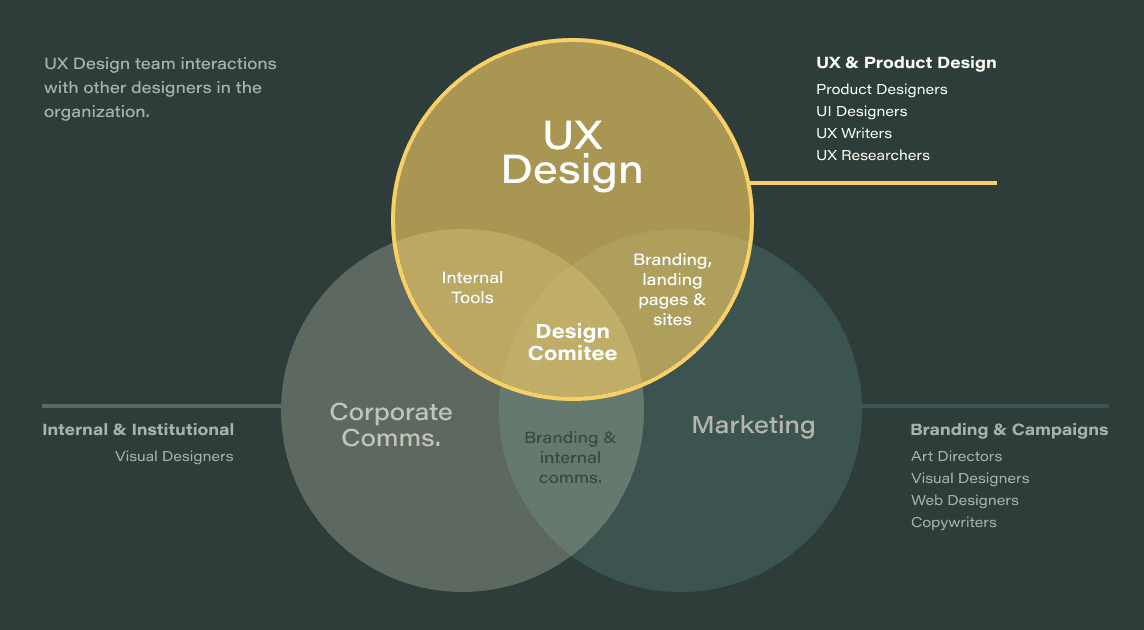
UX Design team interactions with other designers in the organization.
From team structure to operations and culture, these were the actions taken:
Team building and leadership
- Separation from marketing, establishing UX as an independent area with its own budget and processes.
- Definition of job descriptions, seniority levels, and career paths.
- Implementation of hiring processes, onboarding, continuous feedback, and 1:1s.
- Expansion to up to 22 members, with clear role definitions for UIs, PDs, Writers and Researchers.
- Remote practices for team building and strengthening a culture of collaboration.
- Collaborated on Modalmais' cultural transformation, shifting to a tribes-and-squads model.
- After merger with XP Inc., did everything possible to highlight and advocate for my team’s talents so they could be reallocated into XP teams.
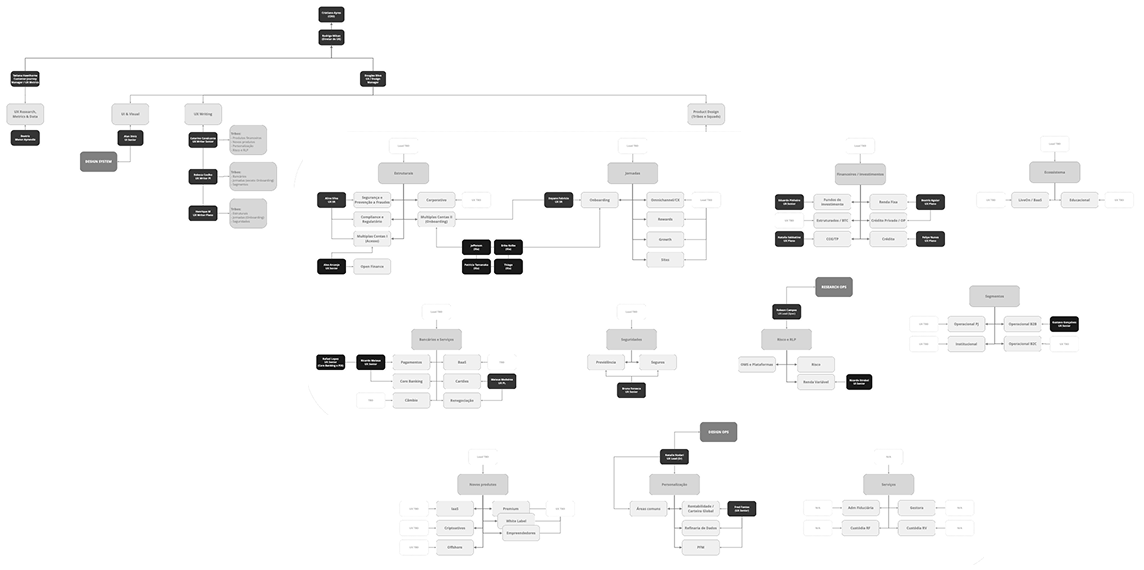 Overview of the team structure in relation to tribes, squads, and chapters.
Structuring Design Ops and Research Ops
- Creation of Design Ops and Research Ops guilds, following best-practice guidelines from NN/g.
- Standardization of deliverables and documentation.
- Adoption of tools such as Hotjar, Maze, Miro, and Typeform, in addition to Figma.
- Creation of a knowledge base for processes and alignment with stakeholders.
- Provision of budget for research.
- Collaborative building of the Design System with the development team.
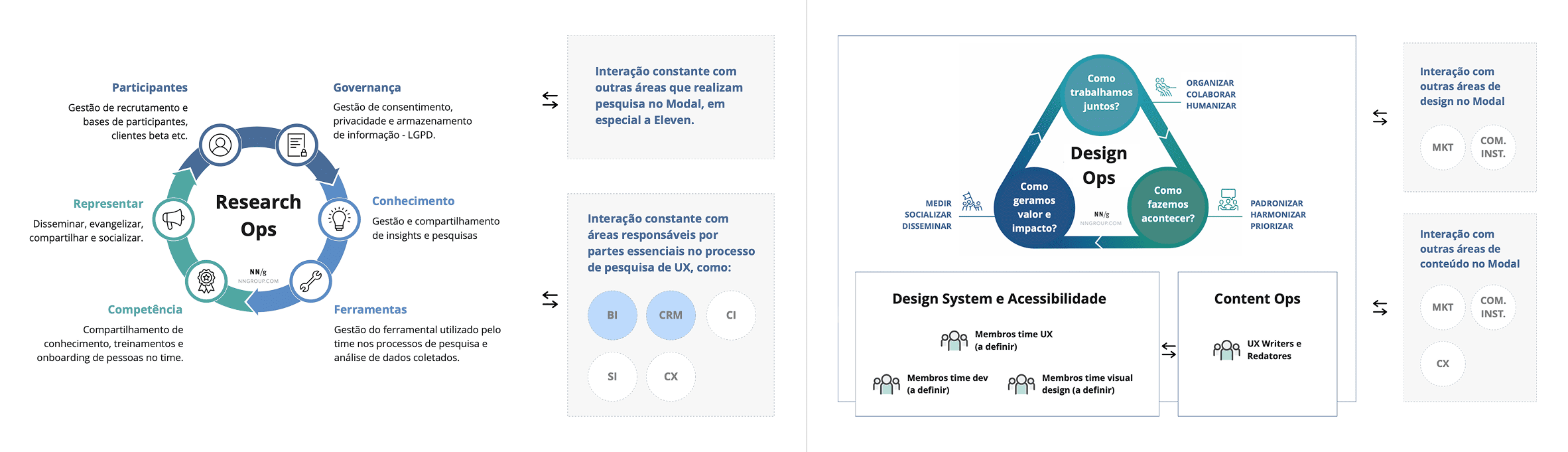 Research Ops and Design Ops foundations.
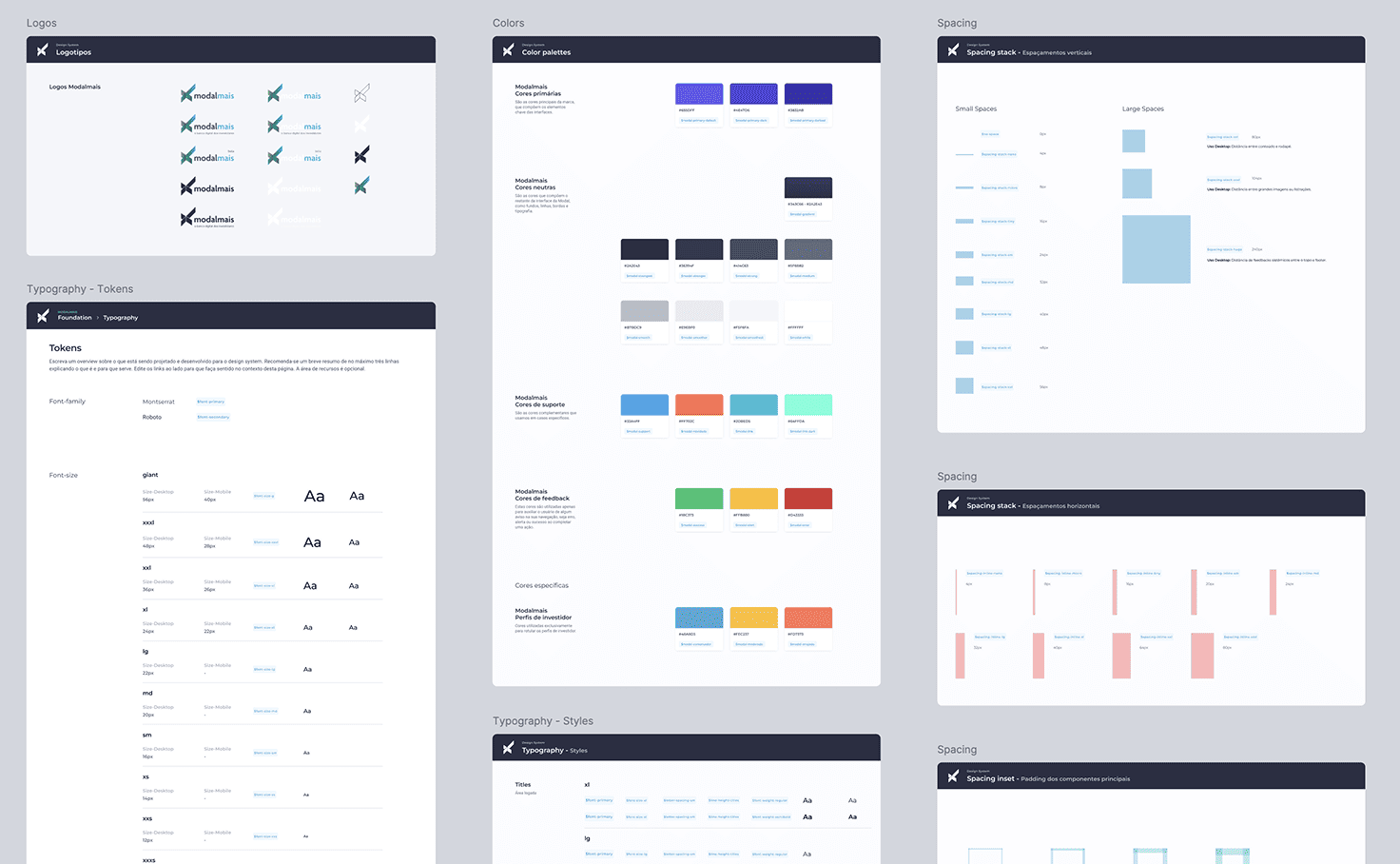 Part of Modalmais Design System.
Monitoring and data culture
- Analysis of navigation recordings and user feedback as a routine for the team.
- Systematic monitoring of NPS, CSAT, and CES.
- Creation of a beta user community and encouragement of active listening.
- Research culture integrated into discovery.
RESULTS
A bank and a design culture from 0 to 1
Full digital bank experience built for personal finances and investments:
- Banking services: balances, statements, transactions, payments, Pix, Open Finance, credit and debit cards, help center and more.
- Investments: fixed Income, Treasury Direct, Investment Funds, COE, Variable Income, among others.
- Insurance and Private Pension.
- Credit: Home and auto equity loans.
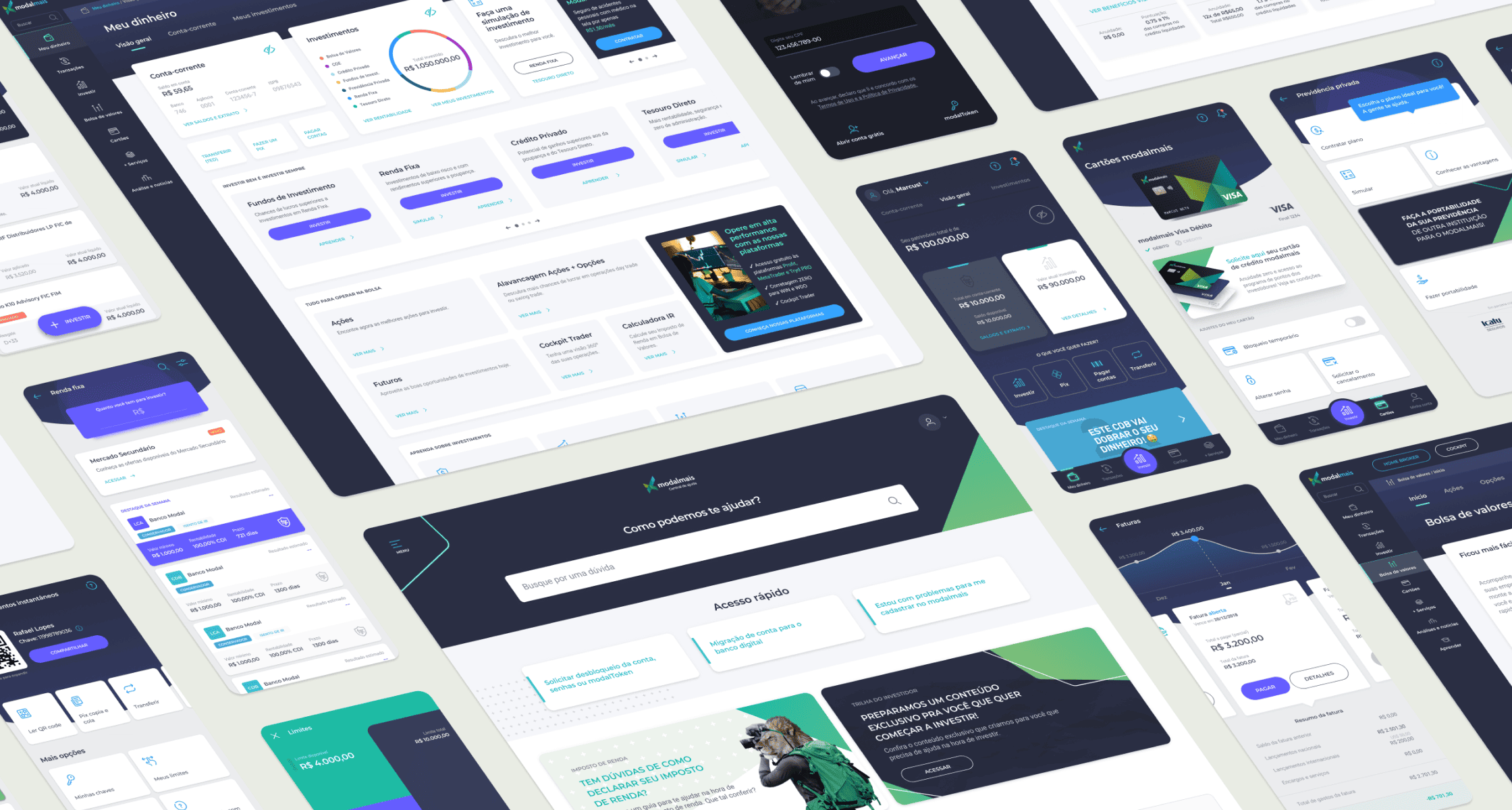
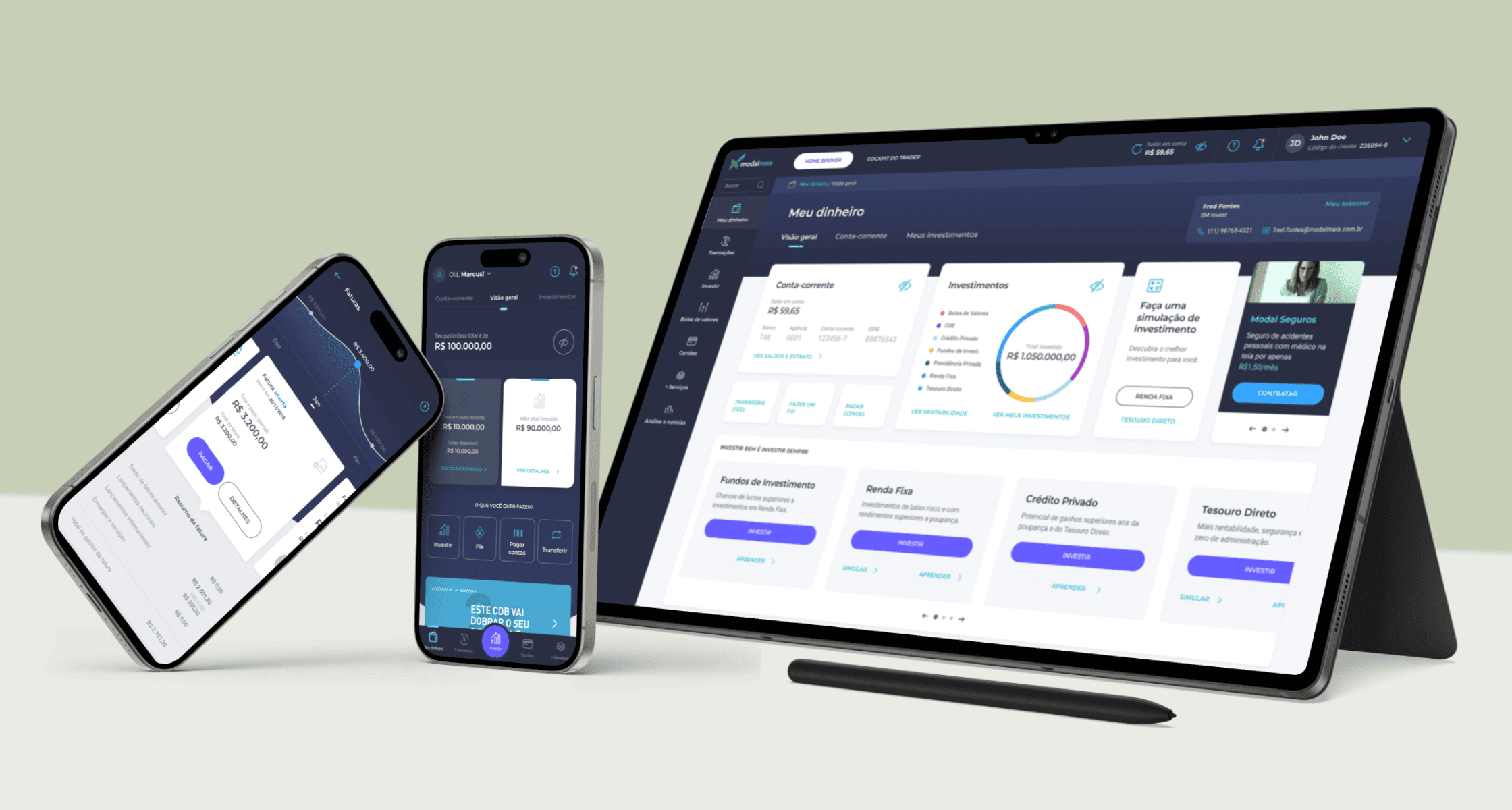 Examples of mobile and web apps screens of Modalmais.
Continuous improvement of the UX over time:
- 2nd place in the Idwall ranking for best banking onboarding, and 1st in YoY evolution.
- Continuous improvement in NPS, CSAT metrics, and app ratings.
- Reduction of friction in critical journeys resulting in increased investment conversions.
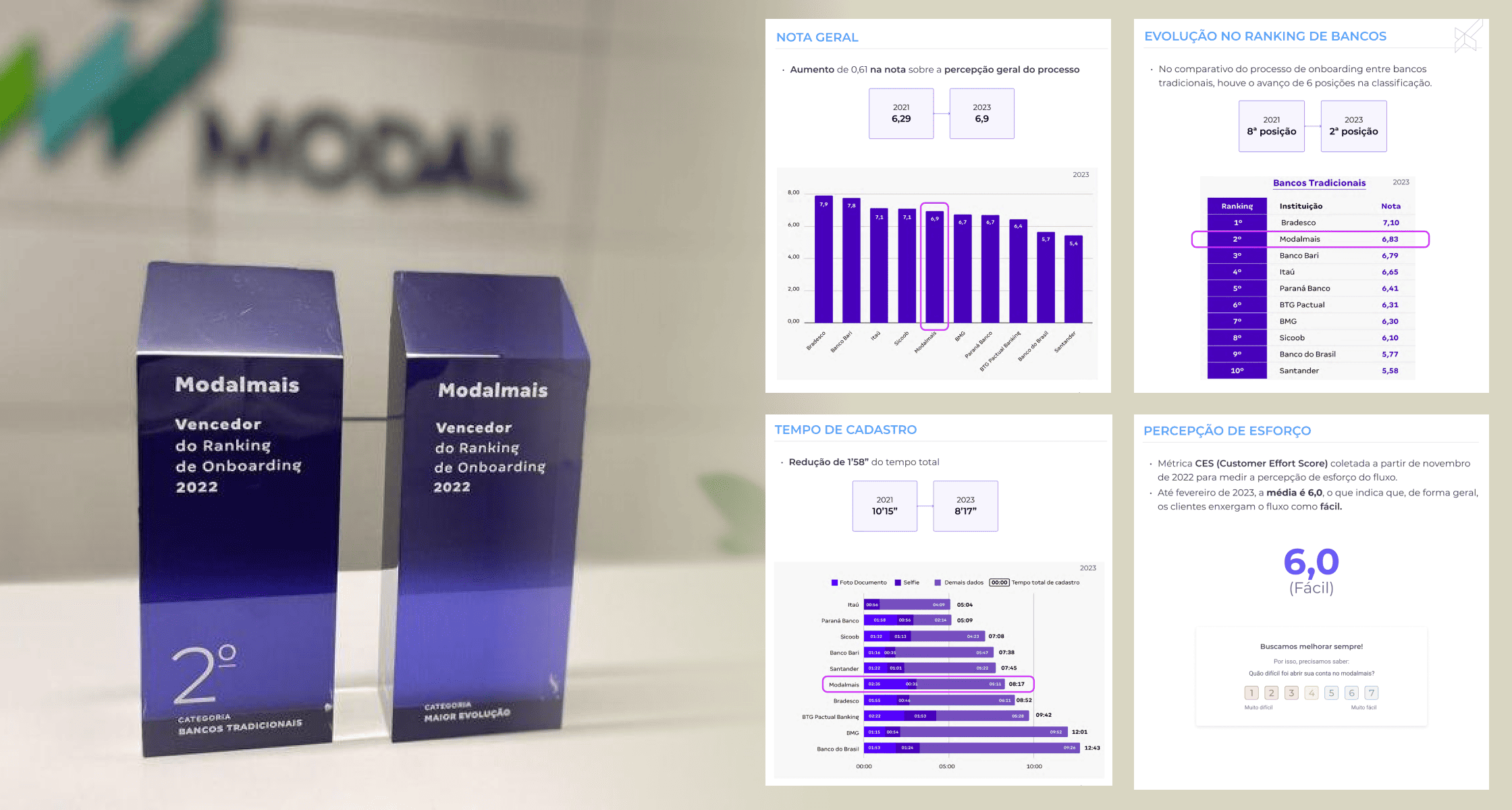 Results of UX improvements made on Modalmais onboarding experience.
Design maturity org-wise:
- Increased design maturity with clear processes, scalability, and a systemic vision.
- Consistent UI design in mobile and web apps.
- User-centric culture integrated into the agile model and product operations.
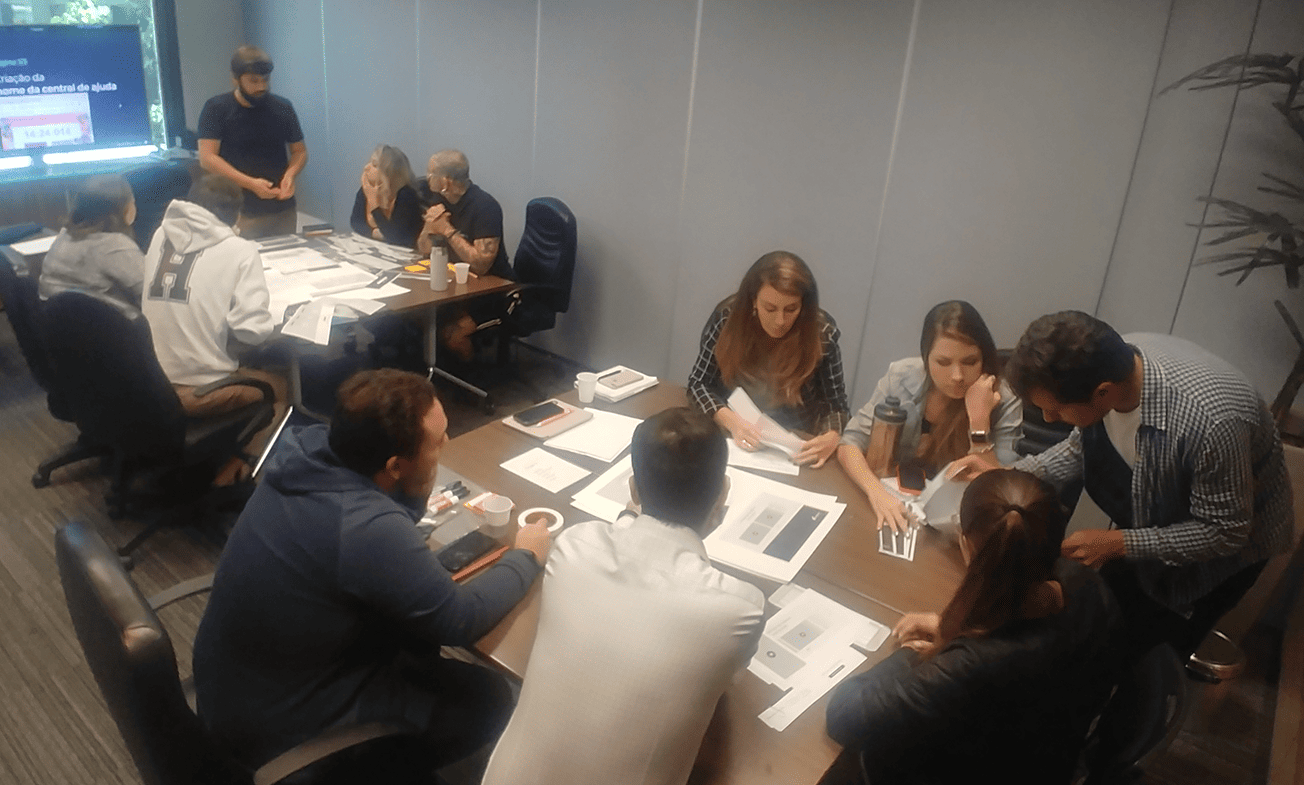 Co-creation session as part of the discovery phase for the new customer support portal.
White label / BaaS experience:
After the merger with XP Inc. and the discontinuation of the Modalmais UX team, I supported Modal in efforts to improve the UX of Modal as a Service, based on a product that had originally been designed by one of the companies acquired by Modal Bank years earlier.
Volkswagen, Thomson Reuters and Vestcasa were some of our clients at that time.
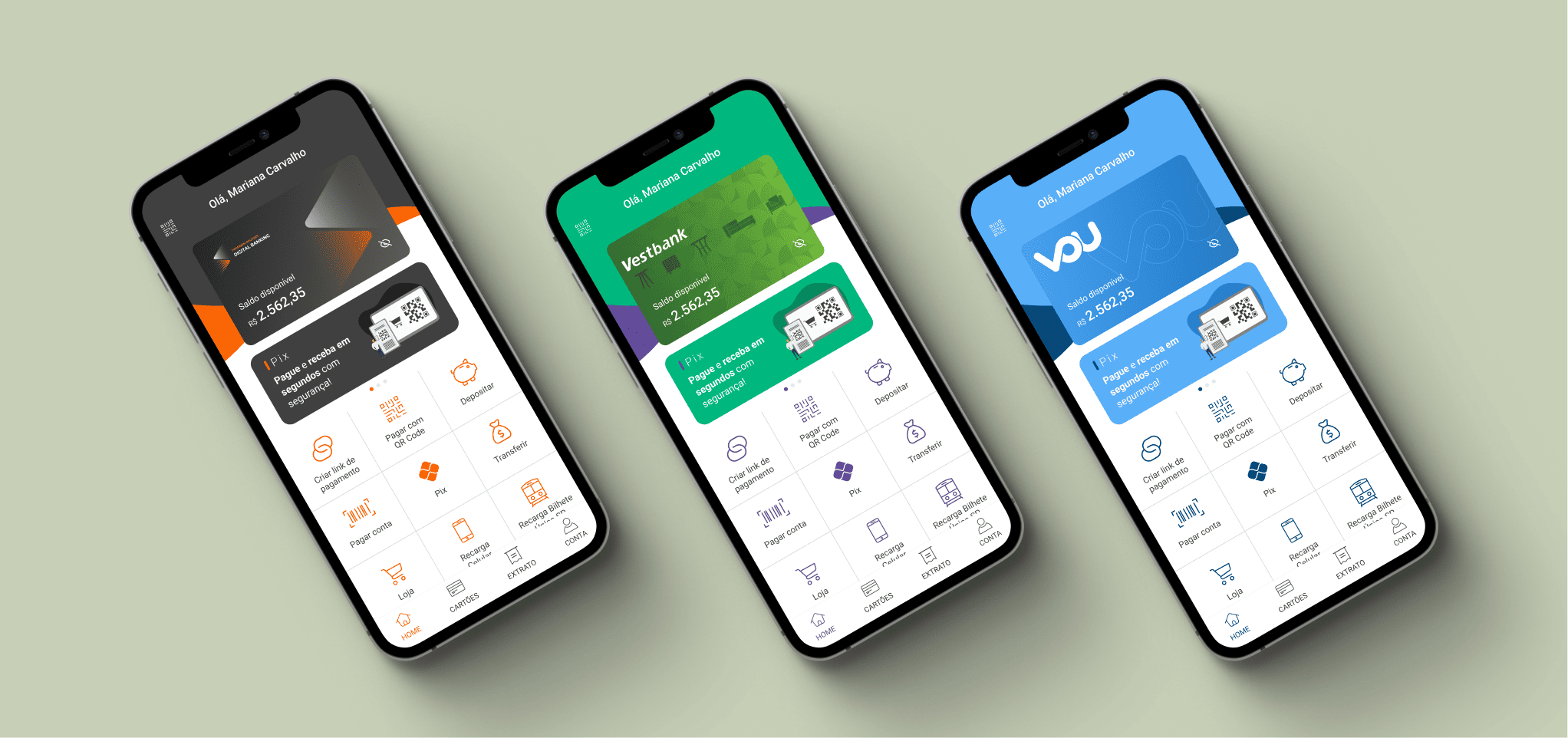 White-label Modal as a Service mobile app, themed for each client's brand.
REFLECTIONS AND KEY LEARNINGS
Do your best and hope for the best
This was the most challenging experience of my career. Not only because it was the first time I got the opportunity to build such a complex thing like a full bank and brokerage experience, or even grow a team this big from scratch.
The context of the huge transformation and digitalization of the finance sector in that period in Brazil + the pandemic and all its impacts in how we work and collaborate, honestly, made me grow in 5 years more than I had in the previous 10, both as a designer and a leader.
No man ever steps in the same river twice, for it's not the same river and he's not the same man. (Heraclitus)
For each of the topics covered in this case, there were so many lessons learned. I want to take some time to share more of them here soon. But I'd highlight 3 simple but powerful takeaways:
Avoid the know-it-all mindset at all costs
Leaders - and also designers - are not supposed to know all the answers or try to be the smartest guy in the room. Active listening, curiosity and the ability to make good questions are crucial tools and we have to keep that in mind instead.
The good is the enemy of the better, which is the enemy of the best
As designers, many of us tend to overthink and want things to be world class since the first step. A mindset of continuous improvement — starting simple, testing early, and failing fast — is the most effective way to increase the value of whatever we're trying to do, whether product-wise or team-wise.
Most of the time, leadership is a lonely business. "Keep calm and carry on" :)
You want the best for the team, the business and the users. But frequently you face trade-off situations and sometimes it may feel like nobody is happy. Especially when tough, unpopular decisions have to be made, or when there’s simply nothing we can do about a situation. It's important to stay resilient, seek clarity, and keep going.
Special thanks to all the great designers, writers qnd researchers that made part of this team.
Perspiration beats inspiration and this is a good example of that.